Ligamentitis is a chronic process of irritation and degeneration of a ligament that occurs due to repetitive strain. It is a common problem among athletes, especially basketball, volleyball, and runners. Early recognition and proper treatment can prevent chronic instability.
What is this injury?
Ligaments are strong bands of connective tissue that connect bones to each other and stabilize joints. Unlike tendons, which connect muscles to bones, the main function of ligaments is to passively stabilize the joint and limit excessive movement.
Ligamentitis occurs when repetitive strain on a ligament exceeds the tissue's ability to adapt, causing micro-damage that fails to heal between workouts. The result is a chronic inflammatory and degenerative process that weakens the ligament and makes the joint unstable.
The most commonly affected areas are:
- ankle — lateral ligaments (especially ATFL)
- Knee joint — collateral ligaments and anterior cruciate ligament (ACL)
- Wrist joint — scapholunar ligament
- Spinal ligaments — lumbar ligaments
Main symptoms
- Persistent dull pain in the joint area, which worsens with load
- Stiffness and stiffness especially after rest periods and in the mornings
- Tenderness on palpation at the attachment points of the ligament on the bone
- Mild swelling around the joint that worsens after exertion
- Feeling of instability in the joint, especially during load and changes in direction
- Decrease in function — difficulty running, jumping, changing directions
- Chronic swelling and thickening in long-term cases
Why does this injury occur?
Overload and microtrauma:
Repeated overloading of the joint causes micro-damage to the ligaments, which accumulates over time. Monotonous training with the same movements is especially dangerous.
Previous ligament injury:
Inadequate rehabilitation after an acute ligament injury leaves the joint chronically unstable, which increases the risk of ligamentitis.
Biomechanical disorders:
Joint misalignment, poor sports technique, and muscle weakness increase the strain on the ligaments. Weak stabilizer muscles force the ligaments to bear most of the load.
External factors:
Uneven training surfaces, repeated jumping technique errors, and improper footwear can cause unexpected joint sprains.
Systemic causes:
Connective tissue diseases such as Ehlers-Danlos syndrome and general joint hypermobility increase susceptibility.
Who experiences this most often?
- Basketball and volleyball players — repeated jumps and landings
- Runners — especially cross-country runners on uneven surfaces
- Footballers — sudden changes of direction and stops
- Dancers — repeated jumps and turns
- Athletes after a ligament injury — inadequate rehabilitation significantly increases the risk
Diagnosis
Clinical study:
- Joint stability tests (ankle: anterior drawer test, talar tilt; knee: Lachman test, pivot shift)
- Palpation of bandage attachment points
- Range of motion assessment
Display studies:
- Ultrasound — shows thickening of the ligament, irregular structure, and calcifications
- MRT — gold standard, shows signal changes in the ligament, partial damage and associated pathology
- Stress X-ray — indicates instability of the joint under load
Differential diagnostics: rule out acute ligament rupture, meniscus injury, cartilage damage, and bone fracture.
What can you do yourself?
- Load modification — reduce painful activities, but maintain general activity
- Ice therapy — 15–20 minutes after exercise to reduce swelling
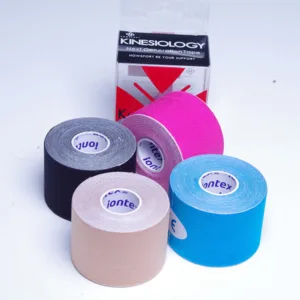
- Orthoses and braces — taping or a support bandage supports the joint and reduces the strain on the ligament
- Proprioceptive training — balance board, standing on one leg, unstable surfaces
- Strengthening stabilizer muscles — training of the muscles surrounding the joint
Ankle exercises:
- Standing on one leg (eyes closed) — 3 x 30 seconds
- Balance board — 3 x 1 minute
- Jumps and landings with control — 3 x 10
Knee exercises:
- Single-leg squat — 3 x 10
- Hamstring strengthening — 3 x 12
- Lateral steps with a rubber band — 3 x 15
When to consult a specialist?
- Joint instability does not improve with 4–6 weeks of exercises
- The pain progressively worsens
- The swelling is persistent and does not respond to home treatment
- Episodes of joint “locking”
- Pain interferes with daily activities and sleep
Physiotherapy and treatment options
Physiotherapy (cornerstone of treatment):
- Progressive neuromuscular training
- Proprioceptive and balance training on unstable surfaces
- Sport-specific movements and landing techniques
Drug treatment:
- NSAIDs (nonsteroidal anti-inflammatory drugs) for acute pain
Additional treatment methods:
- PRP injections (platelet-rich plasma) — stimulates healing of the wound in chronic cases
- Prolotherapy — injection of an irritating solution to stimulate healing
- Shockwave therapy — for chronic ligamentitis
Surgical treatment:
Necessary if conservative treatment fails and joint instability persists. Options: ligament reconstruction or augmentation.
Recovery and return to sports
- Phase 1 (1–3 weeks): load reduction, pain relief, light mobility exercises
- Phase 2 (3–8 weeks): proprioceptive training, muscle strengthening, balance exercises
- Phase 3 (8–12 weeks): sport-specific training, changes of direction, jumps
- Phase 4 (12+ weeks): full return to sports under control
Criteria for returning to sports:
- Pain-free movement throughout the entire range of motion
- Stability tests negative
- Muscle strength at least 90% of healthy half level
- Successfully completed sport-specific test
Prevention
- Regular strengthening of the muscles that stabilize the joint
- Proprioceptive training (balance board, unstable surfaces) at least 2x per week
- Comprehensive rehabilitation of previous ligament injuries
- Use of orthosis in risk areas (ankle support in basketball, volleyball)
- Correct sports technique and landing technique
- Selection of training area and checking the suitability of equipment
- Warming up and preparing joints before exercise
Frequently Asked Questions (FAQ)
What is the difference between ligament inflammation and ligamentous laxity?
Ligamentitis is a chronic degenerative process in which the ligament is not severed, but rather irritated and weakened. A ligament tear is an acute injury in which the ligament is partially or completely torn.
Will tendonitis heal on its own?
Milder cases may improve with weight reduction and rest, but most cases require active rehabilitation. Without treatment, the condition tends to become chronic.
Should training be stopped completely?
No, complete immobilization is not recommended. Reduce painful activities, but continue to move and begin doing stabilizer muscle exercises.
How long does recovery take?
Ligamentitis usually takes 6-12 weeks to heal with active rehabilitation. Chronic cases may take longer.
Summary
Ligamentitis is a chronic overuse condition of the ligament that requires active rehabilitation. The cornerstone of treatment is proprioceptive training and strengthening of the muscles that stabilize the joint. Early treatment and consistent exercise ensure a good prognosis.
This article is for informational purposes only and does not replace a doctor's consultation.
Please note: The information provided here is for general educational purposes only. It is not a substitute for professional medical advice. If you are injured, seek medical attention.
Found a bug? Let us know.
Category
◀ Overuse injuries
Related articles
▶ Lower back pain▶ Iliotibial band syndrome or Iliotibial tendinitis▶ Runner's knee▶ Achilles tendonitis▶ Cartilage inflammation▶ Inflammation of the tendon and tendon sheath (tendinitis and tendovaginitis)← All articles
See all 120 sports injury articles


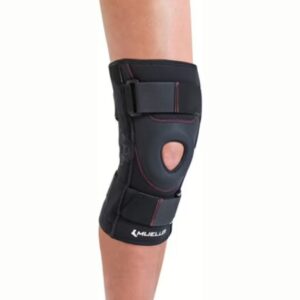 Selection helpWhich orthosis is right for you?Knee, ankle and wrist orthoses with light, medium and strong support – choose the body part and situation.Find the right orthosis →
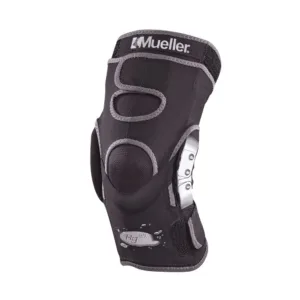 EnimmüüdudMueller® Hinged Knee OrthosisHinged support for the knee after injury and in sports.€64.50View product →