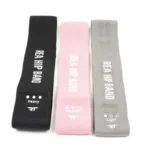
DESCRIPTION
Epicondylitis is one of the most common overuse injuries in the elbow joint. There are two forms: lateral epicondylitis (“tennis elbow”) and medial epicondylitis (“golfer’s elbow”). Lateral epicondylitis affects the area of the outer bony prominence of the elbow (lateral epicondyle), where the tendons of the wrist and finger extensor muscles attach, especially the extensor carpi radialis brevis. Medial epicondylitis affects the inner prominence of the elbow (medial epicondyle), where the tendons of the wrist and finger flexor muscles attach. The lateral form is 5-10 times more common. Despite the name, it is more of a degenerative process (tendinosis) than an acute inflammation.
REASONS
- Repetitive wrist extension and rotation (lateral epicondylitis): tennis backhand, using a computer mouse, working with tools
- Repetitive wrist flexion and pronation (medial epicondylitis): golf swing, throwing, lifting
- Incorrect sports technique: tennis backhand technique errors are the most common cause
- Inappropriate equipment: racket too heavy, handle too big, strings too tight
- Sudden increase in load (e.g. intense play at the beginning of the tennis season)
- Poor physical preparation: weak forearm muscles
- Age (30-50 years is the most common age of occurrence)
- Occupational risk factor: cooks, builders, office workers, musicians
SYMPTOMS
- Pain on the outside (lateral) or inside (medial) side of the elbow joint
- The pain worsens with gripping and lifting movements (lifting a coffee cup, a carton of milk)
- In the lateral form: pain when extending the wrist with resistance, when squeezing the hand
- In the medial form: pain during wrist flexion and pronation, throwing movements
- Pain often radiates to the forearm
- Weakening of grip strength — difficulty holding things
- Pain on palpation in the epicondyle area
- Morning stiffness in the elbow area
DIAGNOSIS
The clinical diagnosis is usually clear. Tests for lateral epicondylitis: Cozen's test (extension of the wrist with a closed fist and the elbow extended against resistance reproduces pain), Mill's test (passive flexion of the wrist with the elbow extended), Maudsley test (extension of the middle finger against resistance). Tests for medial epicondylitis: flexion of the wrist against resistance reproduces pain medially. Palpation: sharp tenderness in the area of the lateral or medial epicondyle. X-rays are usually normal, but in long-standing cases may show calcifications. Ultrasound shows tendon degeneration, thickening, and neovascularization. MRI is necessary in atypical cases.
RAVI
Conservative treatment is effective in 80-95% of cases, but recovery is often slow (6-12 months). Primary treatment: modification of provocative activities, ice application and NSAIDs (short-term). A forearm counterforce brace reduces the load on the tendon attachment site. Physiotherapy: eccentric forearm muscle training is the gold standard — the Tyler twist (FlexBar exercise) is an evidence-based eccentric exercise for the treatment of lateral epicondylitis. Stretching, cruciate massage and muscle strengthening. Improving sports technique (coaching). Equipment adaptation: lighter racket, more appropriately sized grip. Corticosteroid injection provides short-term (4-6 weeks) relief, but long-term results are not better. PRP injections are promising in chronic cases. Shockwave therapy. Surgical treatment (debridement of degenerated tendon tissue) is the last option after 6-12 months of unsuccessful conservative treatment.
PREVENTION
- Correct sports technique (tennis backhand with the whole body, not just the wrist)
- Choosing the right equipment (racquet weight, handle size, string tension)
- Regular strengthening and stretching of the forearm muscles
- Gradual increase in training load at the beginning of the season
- Warming up before the game and stretching after
- Epicondylitis band preventively during risky activities
- Ergonomic adjustments at the workplace (mouse position, keyboard)
Please note: The information provided here is for general educational purposes only. It is not a substitute for professional medical advice. If you are injured, seek medical attention.
Found a bug? Let us know.
Category
◀ Overuse injuries
Related articles
▶ Lower back pain▶ Iliotibial band syndrome or Iliotibial tendinitis▶ Runner's knee▶ Achilles tendonitis▶ Cartilage inflammation▶ Inflammation of the tendon and tendon sheath (tendinitis and tendovaginitis)← All articles
See all 120 sports injury articles


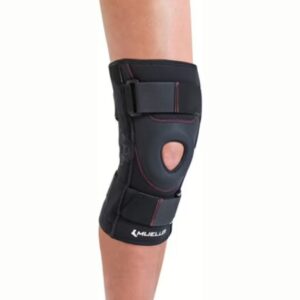 Selection helpWhich orthosis is right for you?Knee, ankle and wrist orthoses with light, medium and strong support – choose the body part and situation.Find the right orthosis →
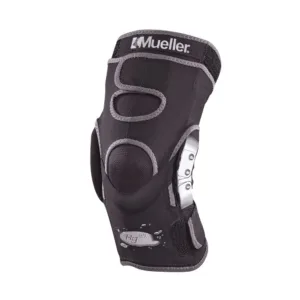 EnimmüüdudMueller® Hinged Knee OrthosisHinged support for the knee after injury and in sports.€64.50View product →