OVERVIEW
Back injuries are extremely common among athletes — up to 20% of all sports injuries involve the spine. The spine is the body's central support structure and is involved in virtually every movement. Understanding, preventing, and properly treating back injuries is important for every athlete and coach.
ANATOMY
Knowing the spine is the foundation for understanding injuries:
- Vertebrae — 7 cervical, 12 thoracic, 5 lumbar, sacrum, and coccyx
- Intervertebral discs (disci intervertebrales) — shock absorbers between the vertebrae, nucleus pulposus + annulus fibrosus
- Ligaments — anterior and posterior longitudinal ligaments, ligamentum flavum, interspinous ligament
- Muscles — superficial (erector spinae, latissimus dorsi) and deep stabilizers (multifidus, transversus abdominis)
- Facet joints — posterior joints of the vertebrae, control movement
- Spinal cord and nerve roots — in the spinal canal and neural foramen
- Blood vessels — segmental arteries and veins
COMMON INJURY MECHANISMS
- Flexion (bending) — disc damage, muscle strain
- Extension (backbend) — facet joint damage, spondylolysis
- Rotation (turning) — disc damage, facet joint injury
- Compression (vertical pressure) — compression fracture, end plate damage
- Combined mechanisms — the most dangerous (e.g. flexion + rotation + load)
CLASSIFICATION OF INJURIES
Muscle injuries:
- Muscle strain and tear — the most common back injury, mostly benign
- Myofascial pain — trigger points, muscle spasm
- Recovery usually 2–6 weeks
Discogenic injuries:
- Disc degeneration — a chronic process
- Disc protrusion and prolapse — acute or gradual
- Radiculopathy — nerve root compression
Bone injuries:
- Compression fracture — a consequence of axial strain
- Spondylolysis — stress fracture of the pars interarticularis
- Spondylolisthesis — displacement of a vertebra
- Spinous process fracture — direct trauma
Neurological problems:
- Radiculopathy — nerve root compression
- Spinal stenosis — narrowing of the spinal canal
- Cauda equina syndrome — an emergency condition
RED FLAGS — when emergency referral is necessary:
- Cauda equina syndrome — bladder dysfunction, bilateral symptoms, saddle numbness
- Progressive neurological deficit — increasing weakness
- Fever + back pain — suspected infection (discitis, epidural abscess)
- Suspected tumor — unexplained weight loss, night pain, previous cancer
- Major trauma — fall from a height, traffic accident
- Osteoporosis risk factors + acute pain — suspected compression fracture
GENERAL TREATMENT PRINCIPLES
Acute phase (0–72 hours):
- Pain relief — NSAIDs, paracetamol
- Short-term activity restriction — but not long-term bed rest
- Ice for acute injury, heat for muscle spasm
- Light exercise according to tolerance
Subacute phase (3 days – 6 weeks):
- Progressive mobility restoration
- Light strengthening — isometric exercises
- Manual therapy — mobilizations, soft tissue techniques
- Aerobic exercise — walking, swimming
Recovery phase (6+ weeks):
- Progressive strengthening — core muscle training
- Functional exercises — sub-specific movements
- Correcting posture and movement patterns
- Returning to sports gradually
RETURN TO SPORTS GUIDELINES
- Full, painless range of motion
- Adequate muscle strength — compared to pre-injury level
- Functional tests passed — without pain
- Subspecific movements pain-free
- Gradually increase the load — not immediately go to full-load training
- Psychological readiness — fear of re-injury can be an obstacle
Suitable products from Medpoint
Please note: The information provided here is for general educational purposes only. It is not a substitute for professional medical advice. If you are injured, seek medical attention.
Found a bug? Let us know.
Category
◀ Back
Related articles
▶ Ankylosing spondylitis▶ Disc prolapse▶ Facet joint pain syndrome▶ Kyphosis or hunchback▶ Lordosis or concave back▶ Vertebral body or compression fracture← All articles
See all 120 sports injury articles


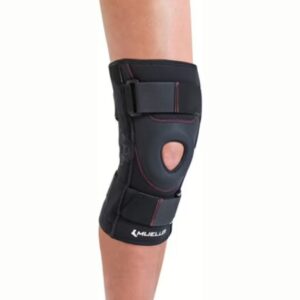 Selection helpWhich orthosis is right for you?Knee, ankle and wrist orthoses with light, medium and strong support – choose the body part and situation.Find the right orthosis →
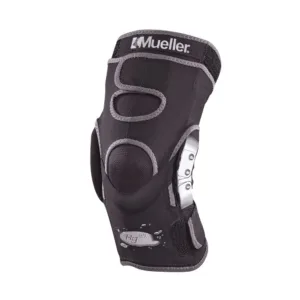 EnimmüüdudMueller® Hinged Knee OrthosisHinged support for the knee after injury and in sports.€64.50View product →