# Osgood-Schlatter syndrome
Osgood-Schlatter syndrome is one of the most common causes of knee pain in growing children and adolescents. It is a benign condition that occurs during the growth period due to overuse of the tibial tuberosity (tuberositas tibiae). The syndrome is particularly common among active young athletes and usually resolves after the growth period ends.
What is this injury?
Osgood-Schlatter syndrome is a traction apophysitis — inflammation of the growth plate region that occurs as a result of constant pulling force on a muscle tendon. The tibial tuberosity apophysis is the area where the bone grows in length and where the patellar tendon (ligamentum patellae) attaches. During the growth period, this apophysis is weaker than the surrounding tendons and muscles.
The active work of the quadriceps muscle of the thigh (quadriceps) during running, jumping and squatting exerts repetitive tensile force on the apophysis. This causes microtrauma, inflammation and the formation of bone fragments. The result is a painful and fluffy lump below the knee above the tibial tuberosity.
The syndrome usually begins between the ages of 10 and 15, when the growth spurt is most intense. It occurs 3 times more often in boys than in girls, but the incidence in girls is increasing.
Main symptoms
- Pain and sensitivity in the area of the tibia tubercle below the knee
- A fluffy, palpable lump above the tibial tuberosity — characteristic feature
- Worsening of pain when running, jumping, climbing stairs and squatting
- Pain relief with a holiday
- Intensification of pain after sports activities
- Usually one-sided, but 20–30% of cases occur in both legs
- Knee bending may be uncomfortable (kneeling is painful)
Why does this injury occur?
Rapid growth spurt — bones grow faster than muscles and tendons, creating mechanical mismatch. Tendons become relatively shorter and increase the tensile force at the attachment site.
Intense athletic activity during the growth period — especially areas that require a lot of running, jumping, and acceleration: football, basketball, volleyball, track and field.
Quadriceps muscle tightness — During rapid growth, the ratio of muscles to tendons changes, which increases mechanical pressure.
Repetitive jumping and running — every jump and landing exerts a tensile force on the tibial tuberosity.
Who experiences this most often?
- Young athletes aged 10–15 years
- Boys (3:1 ratio with girls), although the gap is narrowing
- Football players, basketball players, volleyball players — lots of jumping and running
- Athletes — especially running and jumping areas
- Multi-sport enthusiasts — who train intensively all year round
Diagnosis
The diagnosis is usually clinical and is based on characteristic complaints and physical examination:
- Pain on palpation above the tibial tuberosity — a characteristic finding
- Visible and palpable lump below the knee
- Pain when extending the knee with resistance — loads the quadriceps
- X-ray — shows fragmentation, thickening of the tubercle, and possible bone fragments
- MRT not usually necessary, used in atypical cases
- Differential diagnosis — rule out infection, tumor, and stress fracture
What can you do yourself?
Adjusting training load — not a complete ban on sports, but limiting painful activities. The child can continue playing sports if the pain is tolerable.
Ice therapy ice pack below the knee 15–20 minutes after exercise, 2–3 times a day.
Stretches:
- Stretching the anterior thigh muscles: while standing, pull the heel to the buttock, hold for 30 seconds, 3 repetitions on each leg
- Hamstring stretch: straight leg forward bend, hold 30 seconds, 3 reps
Knee brace strap (infrapatellar strap) — transfers some of the pulling force and reduces pressure on the patella. Useful during exercise.
When to consult a specialist?
- The pain is so severe that the child cannot play sports or walk normally.
- The swelling is large and the redness is noticeable.
- Pain does not improve with weight-loss within 2–3 weeks
- Fever is present (indicating infection)
- The pain is atypical — night pain, pain at rest
Physiotherapy and treatment options
Conservative treatment is the main approach, as the syndrome is benign:
- Quadriceps Stretch — reduces the pulling force on the bump
- Hamstring stretching — often accompanied by stress during the growing season
- Anti-inflammatory drugs — for short-term relief of pain and swelling
- Infrapatellar strap — reduces tendon tension
- In more severe cases temporary ban on sports for 2–4 weeks
Surgical treatment is necessary very rarely — only to remove a persistent and disturbing bone fragment in adulthood.
Recovery and return to sports
Osgood-Schlatter syndrome usually goes away on its own. at the end of the growing season (16–18 years in boys, 14–16 years in girls), when the apophysis ossifies.
Continuing to exercise is mostly possible by adjusting the load:
- Reduce jumping and sprinting if the pain is severe.
- Exercise in alternative areas (swimming, cycling) during periods of more severe pain
- Return to full activity gradually as pain permits.
Long-term forecast is excellent — over 90% of cases heal completely. A persistent bump below the knee is cosmetic but usually painless.
Prevention
- Reasonable management of training load during the growing season — do not overload
- Regular stretching of the front and back thigh muscles — after every workout
- Changing sports — avoid year-round intensive training in one area
- During a growth spurt limiting the amount of intense jumps and sprints
- Sufficient rest between workouts — at least 1–2 rest days per week
Aids from Medpoint
Frequently Asked Questions (FAQ)
Will Osgood-Schlatter syndrome go away on its own?
Yes, the syndrome usually resolves at the end of the growth period when the apophysis is fully ossified. This usually happens between the ages of 16 and 18 in boys and 14 and 16 in girls.
Can the child continue playing sports?
In most cases, yes, if the pain is tolerable. A complete ban on sports is usually not necessary. The load should be adjusted and painful activities should be limited.
Will the bump below the knee remain?
The bump may persist after symptoms have subsided, but it is usually painless and a cosmetic problem.
Can Osgood-Schlatter occur in both legs?
Yes, in 20–30% of cases, the syndrome occurs in both legs, either simultaneously or at different times.
When is surgery necessary?
Surgical treatment is very rarely necessary — only if a detached bone fragment causes persistent pain in adulthood.
Summary
Osgood-Schlatter syndrome is a benign growth spurt that occurs in active young athletes due to overuse of the tibial tuberosity. The syndrome usually resolves by the end of the growth spurt and rarely requires surgical treatment. Weight-bearing exercises, stretching, and ice therapy are the mainstays of treatment.
This article is for informational purposes only and does not replace a doctor's consultation.
Please note: The information provided here is for general educational purposes only. It is not a substitute for professional medical advice. If you are injured, seek medical attention.
Found a bug? Let us know.
Category
◀ Knee joint
Related articles
▶ Baker's cyst or Popliteal cyst▶ Jumper's knee▶ Runner's knee or Patellofemoral pain syndrome▶ Collateral ligament injury▶ Joint cartilage pain or chondropathy or softening of the cartilage▶ Meniscus injury← All articles
See all 120 sports injury articles


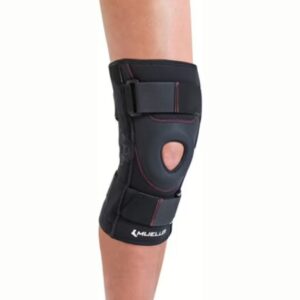 Selection helpWhich orthosis is right for you?Knee, ankle and wrist orthoses with light, medium and strong support – choose the body part and situation.Find the right orthosis →
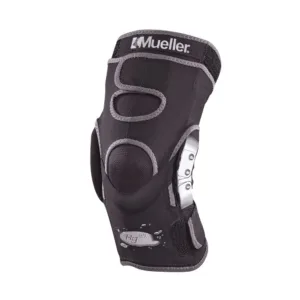 EnimmüüdudMueller® Hinged Knee OrthosisHinged support for the knee after injury and in sports.€64.50View product →