Achilles tendonitis, or Achilles tendinopathy, is one of the most common sports injuries, causing pain and stiffness in the back of the shin. The injury occurs when the tendon is overused and is especially common in runners, dancers, and ball players. Timely treatment and consistent rehabilitation can help the athlete recover fully.
What is this injury?
The Achilles tendon (tendo calcaneus) is the largest and strongest tendon in the human body, connecting the gastrocnemius and soleus muscles at the back of the lower leg to the heel bone. The tendon must withstand heavy loads - up to 6–8 times your body weight is exerted on it when running.
Modern sports medicine terminology prefers the term “tendinopathy” because histologically it is a degenerative rather than a classic inflammatory process. Microscopic tears, degeneration of collagen fibers, and neovascular changes (growth of new blood vessels into the affected area) occur in the tendon tissue.
Two main forms are distinguished:
- Medial tendinopathy – the lesion is located 2–6 cm above the heel bone, where the blood supply to the tendon is weakest. This is the most common form, especially in runners.
- Insertion tendinitis – the damage is located at the tendon attachment point on the heel bone. It occurs more often in older and less active people and may be accompanied by a heel spur (Haglund's deformity).
It is important to know that tendinopathy is a gradual process – the condition of the tendon worsens over time if the load is not adjusted. Early intervention yields the best results.
Main symptoms
- Morning stiffness and pain – the first steps after waking up are painful and stiff, but it eases within minutes
- Pain at the beginning of exercise – the pain decreases with warming up, but in the later stages the pain no longer disappears during exercise
- Tendon swelling and thickening – the tendon in the affected area is noticeably thicker than on the other leg
- Crepitation – a crunching or cracking sound is felt when the tendon is moved
- Tenderness on palpation – sharp pain occurs when squeezing the tendon with your fingers
- Difficulty rising on tiptoe – strength has decreased and movement is painful
- Gradual worsening – symptoms worsen over weeks and months if left untreated
Why does this injury occur?
Overload and training errors – the most common cause is increasing training load too quickly (volume, intensity, or both). The “no more than 10% per week” rule helps to avoid overload.
Biomechanical problems – Excessive pronation (the foot rolls inward), flat feet, or high arches change the distribution of stress on the tendon. Shortening and stiffness of the calf muscles (especially the gastrocnemius) also increase the risk.
Inappropriate footwear – worn-out running shoes (over 600–800 km) no longer provide adequate cushioning. Shoes that are too stiff or a sudden switch to minimalist shoes puts excessive strain on the tendon.
Training areas – training on hard surfaces (asphalt, concrete) and repeated downhill running significantly increase the load on the tendon.
Age and lifestyle – from the age of 30, the blood supply and elasticity of the tendon decreases. Being overweight increases the force acting on the tendon with every step.
Who experiences this most often?
- Long-distance runners – especially those who rapidly increase training volume
- Ball players – basketball, football, badminton (athletes in acceleration events)
- Dancers – especially ballet dancers due to standing on tiptoe
- Middle-aged recreational athletes (35–55 years old) – “weekend warriors” who train irregularly
- Overweight active people – greater body weight, but tendon strength has not adapted
- Users of fluoroquinolone antibiotics – these medications increase the risk of tendon damage
Diagnosis
Diagnosis is based primarily on clinical examination and history. The doctor palpates the entire tendon, assessing tenderness, thickening, and crepitus. The affected area is usually clearly localized.
Provocation tests:
- Toe-rising test – standing on one leg on tiptoe (either painful or lacking strength)
- Dorsiflexion with resistance – the doctor forces the foot into dorsiflexion, assessing pain and strength
- Royal London Hospital test – pain on palpation during plantar flexion decreases (positive for medial tendinopathy)
Imaging diagnostics:
- Ultrasound – a quick, inexpensive and effective study that shows tendon thickening, neovascularization and structural changes
- MRT – necessary in more complex cases to rule out a partial tear or to assess the extent of the damage before surgery
Differential diagnosis should include retrocalcaneal bursitis, plantar fasciitis, tibial stress reaction, and posterior ankle compression.
What can you do yourself?
Load adjustment – don't stop exercising completely, but reduce the load to a level where pain is minimal. Replace running with swimming or cycling.
Ice massage – Massage the painful area with an ice cube for 10–15 minutes, 2–3 times a day. This will help reduce swelling and pain.
Alfredson Eccentric Protocol (Step-by-Step Guide):
1. Stand on the edge of the stairs with your heels over the edge
2. Rise on your toes with both feet
3. Lift your healthy leg up and *slowly* (5 seconds) lower your affected leg until your heel falls below the step.
4. Rise back up on both legs (not just the injured leg)
5. Do 3 sets x 15 reps, twice a day
6. Continue for 12 weeks – moderate pain during exercise is allowed (up to 5/10 on a pain scale)
7. If the exercise becomes painful, add weight with a backpack
Stretching the calf muscles – hold the stretch for 30 seconds, 3 times, with a straight and bent knee (different muscle).
Heel lifts – 1–2 cm high silicone heel lifts in shoes temporarily reduce tension on the tendon.
When to consult a specialist?
- Pain does not respond to weight reduction and self-care within 2 weeks
- Sudden sharp pain in the tendon area with a “snap” sensation (possible rupture!)
- The pain is constant even at rest and disrupts sleep
- It is impossible to bear weight on the leg.
- Symptoms occur in both legs at the same time
- You have previously had an Achilles tendon injury in the same leg.
Suitable products from Medpoint
Please note: Sudden sharp pain with loss of strength when rising on your toe indicates a possible complete tendon rupture – go to the emergency department immediately.
Physiotherapy and treatment options
Eccentric training – an evidence-based gold standard, the effectiveness of which has been proven in numerous studies. A physiotherapist will tailor the program to the individual and monitor progress.
Manual therapy – soft tissue mobilization, instrumental soft tissue therapy (IASTM) and joint mobilization.
Shockwave therapy (ESWT) – effective in chronic cases where eccentric training alone does not provide sufficient results. Typically 3–5 sessions.
PRP injections (platelet-rich plasma) – an alternative treatment with a growing evidence base. It is injected into the affected area of the tendon.
Drug treatment – NSAIDs (ibuprofen, diclofenac) for short-term acute pain relief. Paracetamol is a safe alternative.
Corticosteroid injections - we contraindicated in the Achilles tendon area due to the risk of tendon rupture.
Surgical treatment – is only considered if 3–6 months of conservative treatment fails. Surgery involves removal of degenerative tissue and, if necessary, tendon reconstruction.
Recovery and return to sports
Recovering from Achilles tendinopathy requires patience – rushing often leads to relapse.
Week 1–2 (acute phase): Reducing the load, ice therapy, avoiding painful activities. Movement within the permissible pain limit.
Weeks 3–6 (beginning of recovery): eccentric training begins, stretching of the calf muscles, gradual return to daily activities.
Weeks 7–12 (progressive load): The difficulty of weight training increases, sport-specific training begins at low intensity. Running training begins at walking.
Weeks 13–16 (return to sports): Return to full training provided that:
- No pain during daily activities and exercise
- The force of rising on the toe is equal on both legs
- Jump tests are symmetrical
- The athlete has completed a progressive running program without symptoms
The average recovery time is 3-6 months. In chronic cases, full recovery can take up to 12 months.
Prevention
- Gradual increase in load – increase training volume by a maximum of 10% per week
- Regular calf muscle stretching – before and after training, with straight and bent knees
- Eccentric training as a preventive measure – 2–3 times a week even for healthy tendons
- Alternating training areas – avoid exercising only on hard surfaces
- Timely change of shoes – running shoes every 600–800 km
- Sufficient rest between workouts – the tendon needs at least 24–48 hours to recover
- Correcting biomechanical problems – individual foot supports if necessary
- Maintaining a healthy weight – every extra kilogram increases the load on the tendon
Frequently Asked Questions (FAQ)
Can I continue training with Achilles tendonitis?
Full training is not recommended, but movement within the pain threshold is important. Replace strenuous activities (running) with low-impact alternatives (swimming, cycling). Eccentric training with moderate pain is allowed and even recommended.
How long does recovery from Achilles tendinopathy take?
The average recovery time is 3-6 months with a consistent treatment program that includes eccentric training. In chronic cases, full recovery may take up to 12 months.
Does a cortisone injection help with Achilles tendonitis?
No – corticosteroid injections in the Achilles tendon area are contraindicated as they significantly increase the risk of tendon rupture. PRP injections and shock wave therapy are used as alternatives.
When is surgery necessary?
Surgical treatment is only considered if 3–6 months of consistent conservative treatment (eccentric exercise, physiotherapy, shockwave therapy) have not yielded results. Approximately 10–25% of patients require surgery.
How to differentiate Achilles tendinopathy from a tendon rupture?
Tendinopathy develops gradually and the pain worsens over weeks. A tear occurs suddenly – you feel a sharp pain, often a “snap”, and the strength to stand on your toe is immediately lost. If you suspect a tear, see a doctor immediately.
Summary
Achilles tendinopathy is a common overuse injury that requires patience and consistent treatment. The Alfredson eccentric training protocol is the evidence-based gold standard, and following it for 12 weeks yields good results in most cases. Early intervention and timely load adjustment are the keys to success – don’t ignore the first symptoms.
This article is for informational purposes only and does not replace a doctor's consultation.
Please note: The information provided here is for general educational purposes only. It is not a substitute for professional medical advice. If you are injured, seek medical attention.
Found a bug? Let us know.
Category
◀ Calf and Achilles tendon
Related articles
▶ Partial rupture of the Achilles tendon▶ Complete rupture of the Achilles tendon▶ Compartment syndrome (thigh compartment syndrome)▶ Anterior tibial syndrome or inflammation of the bone sheath▶ Tennis player's foot or rupture of the gastrocnemius muscle← All articles
See all 120 sports injury articles


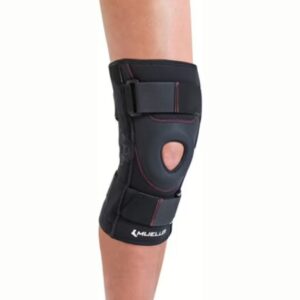 Selection helpWhich orthosis is right for you?Knee, ankle and wrist orthoses with light, medium and strong support – choose the body part and situation.Find the right orthosis →
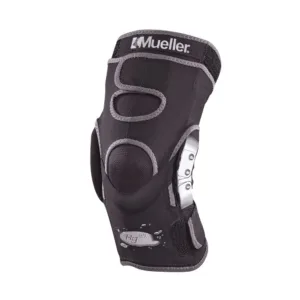 EnimmüüdudMueller® Hinged Knee OrthosisHinged support for the knee after injury and in sports.€64.50View product →