Material
Choosing the right material will affect the durability and ease of use of the exercise ball. The following are the most common materials used in the production of exercise balls:
- Environmentally friendly PVC – Elastic, hard-wearing and often with a matte finish. Ideal for gyms that value sustainability and long-term use.
- Recycled PVC – Typically has a shinier surface, rougher texture, and may emit a plastic smell. While durable, it is generally considered less efficient than environmentally friendly PVC.
- TPE (thermoplastic elastomers) – A soft, flexible and environmentally friendly material that has good elasticity, but may not be as durable as PVC for intensive use.
- NBR (nitrile butadiene rubber) – Synthetic rubber material that is soft and comfortable, but can wear out faster under heavy use.
- Rubber – Less common, but offers good durability and grip. Some rubber balls contain latex, so consideration should be given to customers with latex allergies.
Size
Exercise balls are available in different sizes to accommodate users of different heights and ensure proper body alignment during exercise. The size of the ball is measured by its diameter, which is determined from the center of the ball when fully inflated.
To find the correct size, the user should sit on the ball as follows:
If your knees are pointing up and your thighs are lower than your hips, you need a larger ball. If your feet don't easily reach the floor, you need a smaller ball.
If you want to use the ball to sit at a desk, it is important that your knees are at a 90-degree angle. Also, if you are between two sizes, choose the smaller one for more stability and the larger one for a more intense workout.
General recommendations for choosing ball size:
Bigger ball is recommended if the user has long legs, a higher body weight, back problems, or if the ball is mainly used for stretching exercises.
Smaller ball better suited for users with shorter legs or a lower body mass index (BMI).
The size of the exercise ball depends on the user's height. General rule for finding the right size:
Under 140 cm → 45 cm stool
140–155 cm → 55 cm stool
156–170 cm → 65 cm stool
171–185 cm → 75 cm stool
Over 186 cm → 85 cm stool
Durability
When choosing an exercise ball, durability is a critical factor that affects both safety and ease of use. Below are two key elements that determine the ball's durability and functionality during workouts.
Anti-burst properties
Anti-burst exercise balls are designed to deflate slowly rather than burst suddenly if punctured, making them particularly safe for use in gyms and during intense workouts.
In the Medpoint e-store you will find a large selection of durable exercise balls with anti-burst technology:


 Selection helpWhich orthosis is right for you?Knee, ankle and wrist orthoses with light, medium and strong support – choose the body part and situation.Find the right orthosis →
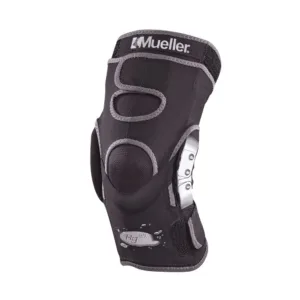 EnimmüüdudMueller® Hinged Knee OrthosisHinged support for the knee after injury and in sports.€64.50View product →